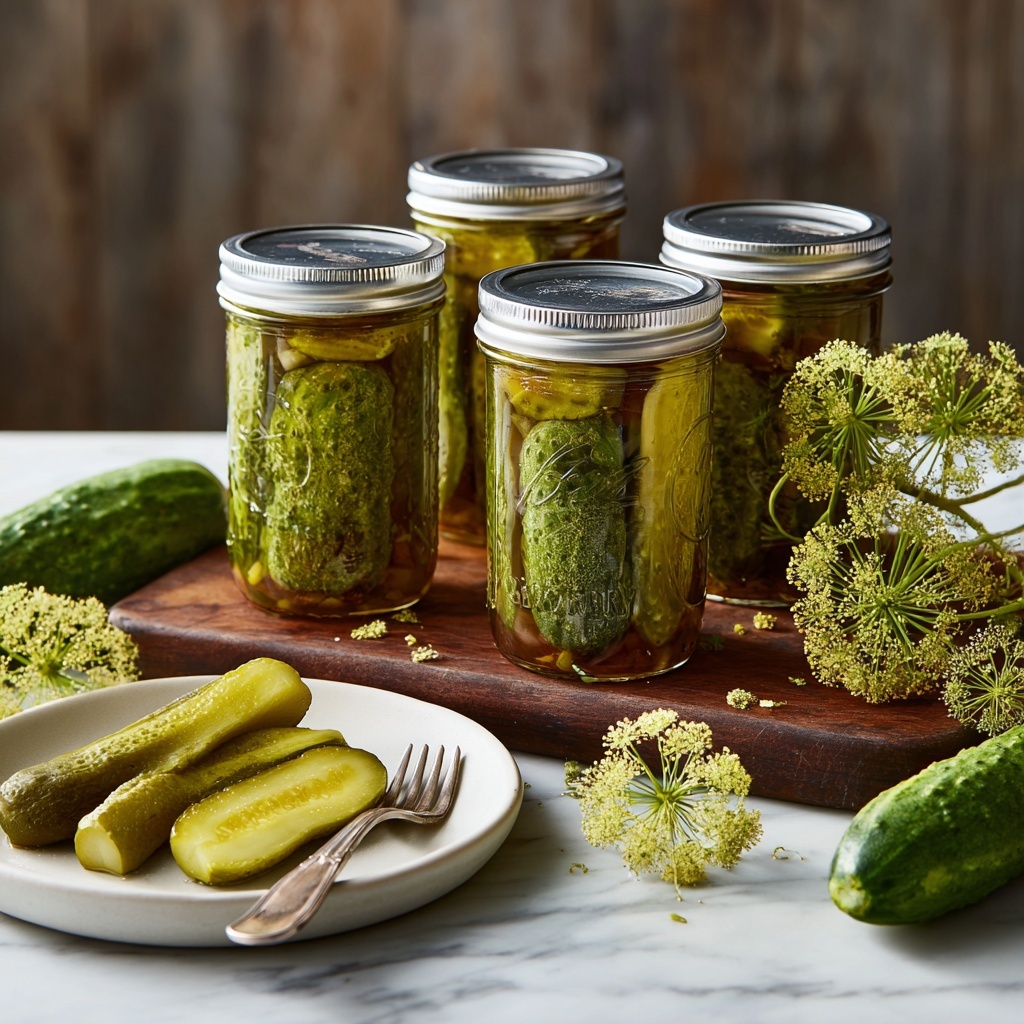
If you’ve ever tasted a pickle so perfectly tangy, crisp, and packed with herbal goodness that it instantly becomes your new obsession, then you are about to fall head over heels for this Traditional Kosher Dill Pickles Recipe. This classic fermenting method brings together simple, wholesome ingredients to deliver that iconic flavor so beloved in Jewish and Eastern European kitchens. Every bite bursts with garlicky warmth, the fresh punch of dill, and that unmistakable crunch that makes these pickles truly unforgettable. Whether you’re a pickle novice or a longtime fan of fermented goodies, this recipe will elevate your pantry and your snack game like no other.
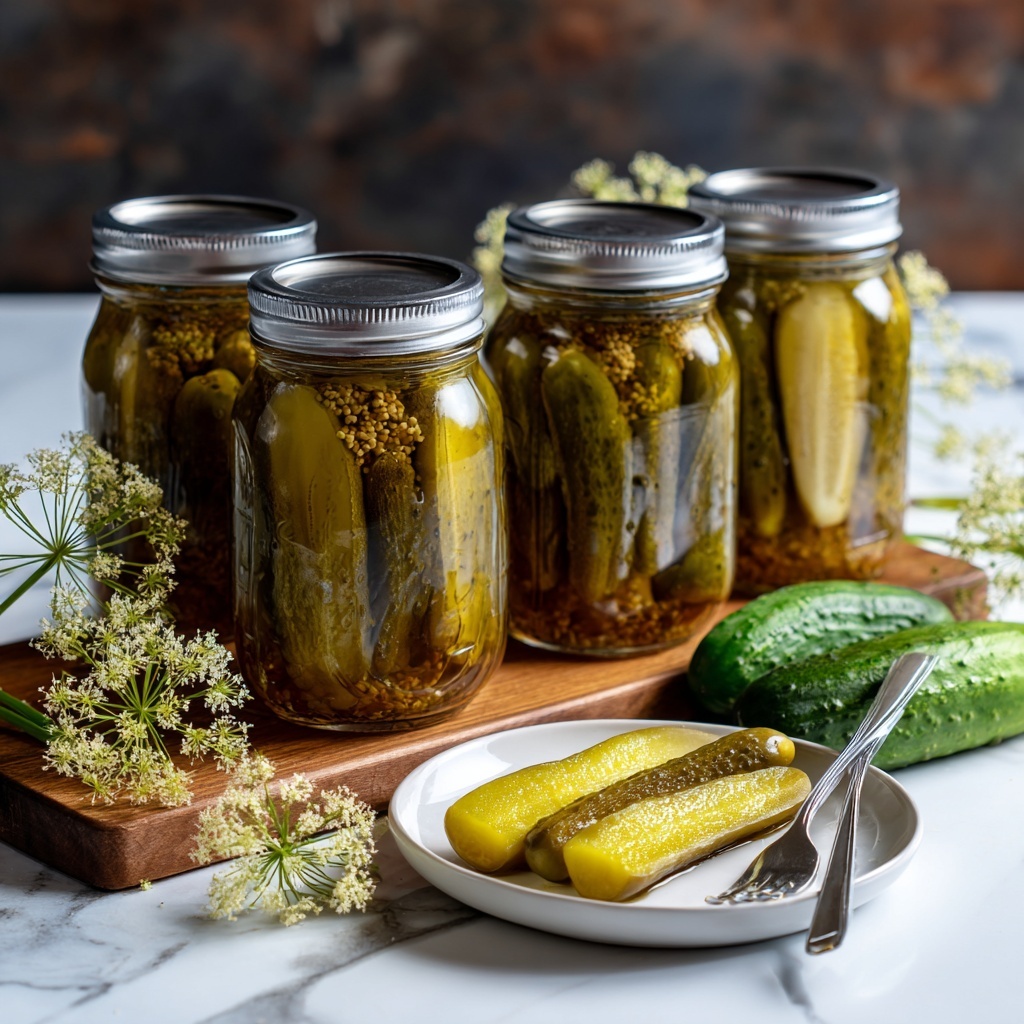
Ingredients You’ll Need
Gathering basic but purposeful ingredients is the first step toward pickle perfection. Each one plays a key role, from creating the ideal fermentation environment to layering flavors that sing in harmony.
- 2 pounds pickling cucumbers: Small to medium cucumbers, about 4–5 inches long, provide the perfect size and texture for crunchy, flavorful pickles.
- 4 cups water: Filtered or spring water is best to avoid chlorine, ensuring a clean ferment and crisp taste.
- 1/4 cup kosher salt (without additives): Essential for controlling fermentation and keeping the brine clear—never use iodized or anti-caking salts.
- 1 tablespoon pickling spice: A medley of flavors that adds depth to the brine (optional, but highly recommended for complexity).
- 6 cloves garlic, smashed: Garlic infuses the pickles with a rich, savory bite that’s quintessential to this recipe.
- 1 tablespoon black peppercorns: Adds a subtle peppery warmth throughout the jar.
- 1 teaspoon mustard seeds: Mustard seeds balance the garlic and dill with a mild, tangy punch.
- 4–6 fresh dill sprigs or 2 tablespoons dill seed: The star herb that gives these pickles their unmistakable “kosher dill” flavor.
- 1–2 grape leaves or bay leaves (optional): Used for their tannins, these help keep the pickles extra crisp during fermentation.
- 1 quart glass jar with tight-fitting lid: A clean, non-reactive vessel perfect for fermenting your cucumbers safely.
How to Make Traditional Kosher Dill Pickles Recipe
Step 1: Prepare the Brine
Start by combining the water and kosher salt in a medium saucepan. Heat gently while stirring until the salt dissolves completely. Remove from heat and allow the brine to cool naturally to room temperature. This cool brine is crucial because hot liquid will kill the beneficial bacteria needed for proper fermentation.
Step 2: Layer Flavors in the Jar
Place smashed garlic cloves, black peppercorns, mustard seeds, fresh dill sprigs (or dill seeds), and your optional grape or bay leaves into the bottom of the quart jar. These ingredients will create a flavorful base that permeates the cucumbers as they ferment.
Step 3: Pack the Cucumbers
Tightly pack the trimmed cucumbers upright inside the jar, ensuring they are snug but not crushed. The goal is to have as little air as possible between them, so they ferment evenly, all the while maintaining good texture.
Step 4: Pour in the Brine
Pour the cooled saltwater brine over the cucumbers until they are fully submerged. If necessary, use a fermentation weight or even a folded cabbage leaf to weigh the cucumbers down, keeping them below the brine level to avoid mold growth. Seal the jar loosely to allow gases to escape as fermentation progresses.
Step 5: Ferment at Room Temperature
Place the jar in a cool, shaded spot away from direct sunlight at room temperature. Let the cucumbers ferment for 5 to 7 days. Check daily for bubbling and a cloudy, cloudy brine—these are good signs that fermentation is active and progressing beautifully.
Step 6: Refrigerate to Stop Fermentation
Once your pickles reach your preferred level of tanginess, tighten the lid and transfer the jar to the refrigerator. Cold slows down fermentation, preserving the crispness and flavor you’ve worked hard to develop. Your pickles will stay fresh and delicious for up to two months.
How to Serve Traditional Kosher Dill Pickles Recipe
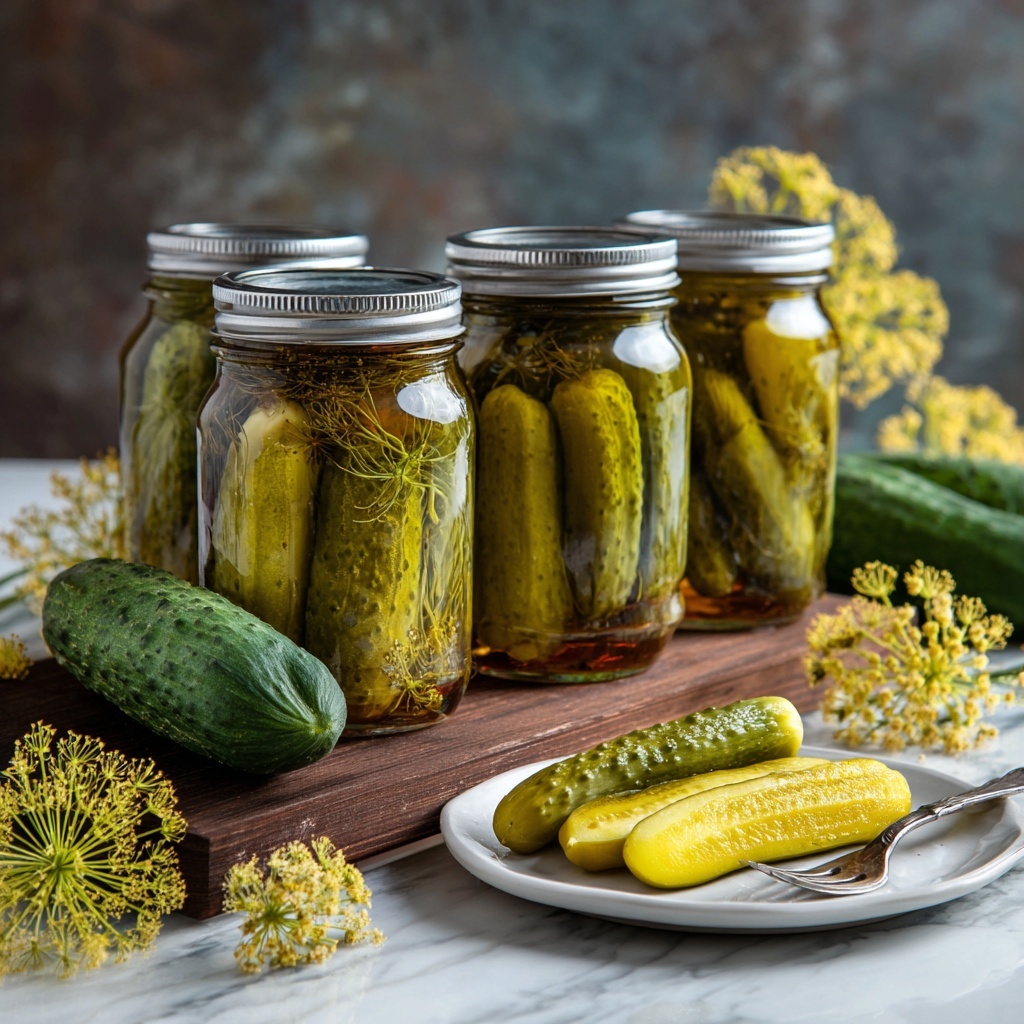
Garnishes
These pickles shine on their own but feel free to enhance them simply. Pair them with fresh sprigs of dill or a sprinkle of crushed garlic flakes to accentuate their savory notes during serving.
Side Dishes
Traditional Kosher Dill Pickles Recipe is a natural companion to classic sandwiches, smoked meats, or your favorite charcuterie board. Their tangy crunch cuts through rich, creamy dishes and brightens up heavier meals with an irresistible zing.
Creative Ways to Present
Try slicing these pickles thinly for wraps or salads, or cut them into spears as a crunchy snack. You could even dice them and mix into potato salad, tuna salad, or egg salad to bring extra zest and texture.
Make Ahead and Storage
Storing Leftovers
Keep your fermented pickles in the refrigerator in the same jar or an airtight container. They maintain their delightful crunch and flavor for up to two months when stored properly.
Freezing
Freezing is not recommended for fermented pickles as it compromises their texture and flavor. Instead, enjoy them fresh from the fridge over time.
Reheating
These pickles are best enjoyed cold or at room temperature. Reheating is unnecessary and will alter their crisp texture and tangy flavor.
FAQs
What makes this a Traditional Kosher Dill Pickles Recipe?
It’s the combination of using kosher salt without additives, fresh garlic, dill, and the fermentation process that follows classic methods handed down through generations in Jewish communities. This tradition brings authentic tang and crunch that defines kosher dill pickles.
Can I use regular table salt instead of kosher salt?
It’s best not to use table salt because it often contains anti-caking agents and iodine, which can cloud the brine and interfere with fermentation. Kosher salt without added ingredients keeps the pickles crisp and clear.
How do I know when the pickles are done fermenting?
Look for bubbling in the jar and a cloudy brine—signs of an active fermentation. Taste a pickle after about 5 days; if it has reached your ideal sourness and crunch, it’s time to refrigerate.
Can I speed up the fermentation process?
Fermentation needs time to develop the characteristic flavors. While warmer temperatures speed things up, rushing it too much can lead to soft or off-tasting pickles. Patience truly pays off here.
What if mold appears on my pickles?
Mold can develop if cucumbers are exposed to air. If you see mold, remove it immediately and ensure your cucumbers are completely submerged. Using fermentation weights and keeping the jar sealed but vented helps prevent this issue.
Final Thoughts
Making this Traditional Kosher Dill Pickles Recipe is like welcoming a little piece of heritage into your kitchen—and trust me, the rewards are absolutely worth it. With just a handful of wholesome ingredients and a few days of waiting, you’ll have pickles that sing with authentic flavor and that perfect crunch. So grab those cucumbers and start your fermentation adventure today. Your taste buds will thank you endlessly!
Print
Traditional Kosher Dill Pickles Recipe
- Prep Time: 15 minutes
- Cook Time: 0 minutes
- Total Time: 15 minutes (plus 5–7 days fermentation)
- Yield: 1 quart 1x
- Category: Condiment
- Method: Fermenting
- Cuisine: Jewish, Eastern European
- Diet: Vegan, Gluten Free
Description
Traditional Kosher Dill Pickles are a classic lacto-fermented cucumber recipe that creates crisp, tangy pickles with natural fermentation. Using kosher salt, fresh dill, garlic, and pickling spices, these pickles develop a distinctive flavor over 5 to 7 days at room temperature. Perfect as a condiment or snack, they keep well in the refrigerator for up to two months.
Ingredients
Brine
- 4 cups water
- 1/4 cup kosher salt (without additives)
Pickles and Seasonings
- 2 pounds pickling cucumbers (4–5 inches long), washed and ends trimmed
- 1 tablespoon pickling spice
- 6 cloves garlic, smashed
- 1 tablespoon black peppercorns
- 1 teaspoon mustard seeds
- 4–6 fresh dill sprigs (or 2 tablespoons dill seed)
- 1–2 grape leaves or bay leaves (optional, for crispness)
- 1 quart glass jar with tight-fitting lid
Instructions
- Prepare the Brine: In a medium saucepan, combine 4 cups of water and 1/4 cup kosher salt. Heat gently while stirring until the salt fully dissolves. Remove from heat and allow the brine to cool completely to room temperature to avoid cooking the cucumbers during fermentation.
- Layer the Jar: In a clean 1-quart glass jar, start by layering the aromatics including 6 smashed garlic cloves, 1 tablespoon black peppercorns, 1 teaspoon mustard seeds, 4–6 fresh dill sprigs or 2 tablespoons dill seed, and optionally 1–2 grape or bay leaves for added crispness.
- Pack the Cucumbers: Tightly pack the washed and trimmed 2 pounds of pickling cucumbers vertically into the jar so they stand upright if possible. This maximizes space and ensures even brining.
- Add the Brine: Pour the cooled brine over the cucumbers until they are fully submerged. To ensure complete submersion, weigh down the cucumbers with a fermentation weight or a folded cabbage leaf.
- Begin Fermentation: Seal the jar loosely with a lid to allow gases to escape during fermentation. Store the jar at room temperature away from direct sunlight for 5–7 days. Check daily for signs of active fermentation such as bubbling and cloudy brine.
- Refrigerate and Store: Once the pickles reach your desired tanginess, tighten the lid and move the jar to the refrigerator to slow the fermentation process. The pickles will stay fresh and crisp for up to 2 months when refrigerated.
Notes
- Use only kosher salt without anti-caking agents to avoid cloudy brine and ensure proper fermentation.
- For extra-crisp pickles, add a small piece of horseradish root or include oak or grape leaves.
- Avoid using tap water containing chlorine; filtered or spring water is ideal for fermentation.